Why August Is the Month Pool Pumps Fail in Fort Worth (and How to Prevent It)
Ask any pool tech in North Texas which month generates the most equipment calls, and the answer is August. It is not a coincidence. By August, your pump has been running its longest schedule of the year for two straight months, the equipment pad has been baking in 100 degree heat, and evaporation is pulling the water level down toward the skimmer line every single day. If you are searching for pool pump repair in Fort Worth this time of year, you are in good company, and the failure you are dealing with almost certainly gave warnings first.
We have repaired and replaced pumps across Fort Worth, Benbrook, Aledo, and Keller every August since 2016. This guide covers why late summer breaks equipment, the warning signs worth acting on the same day, and the point where repair stops making sense.
Why Peak Heat Is So Hard on Pool Equipment
Three August conditions gang up on your pump at once.
The first is runtime. As we covered in our July guide to algae prevention, Fort Worth pools need 8 to 12 hours of daily circulation in peak heat to stay clear. That is two to three times the spring schedule, and every extra hour is wear on the motor, bearings, and seal.
The second is ambient heat. Pump motors are air-cooled, and most Fort Worth equipment pads sit in full sun against a hot fence or wall. A motor pulling long hours in 100 degree air runs near the top of its thermal limits all afternoon. Heat is what pushes a weakening capacitor or a dry bearing over the edge, which is why so many failures happen during the hottest week of the year.
The third is evaporation. Area pools can lose a quarter inch of water or more per day in August. Let the level drop below mid-skimmer and the pump starts gulping air with its water. Air in the system means lost prime, and a pump that runs dry for even a short stretch can overheat, melt the pump basket housing, and destroy its shaft seal. A surprising number of the “my pump died” calls we take in August started as “the water got low over vacation.”
Warning Signs Your Pump Is Struggling
Pumps rarely fail silently. Act on these the day you notice them.
A change in sound is the earliest signal. A healthy pump hums steadily. Screeching or grinding points to failing motor bearings, and a loud hum with no water movement usually means a seized motor or a dead start capacitor. Bearings and capacitors are inexpensive fixes when caught early and become full replacements when ignored.
Air where it does not belong is the second. Bubbles blowing from the return jets or churning inside the pump basket lid mean the system is sucking air, from a low water level, a cracked pump lid o-ring, or a suction-side leak. Along with it, watch for a pump that loses prime overnight and struggles to catch again in the morning.
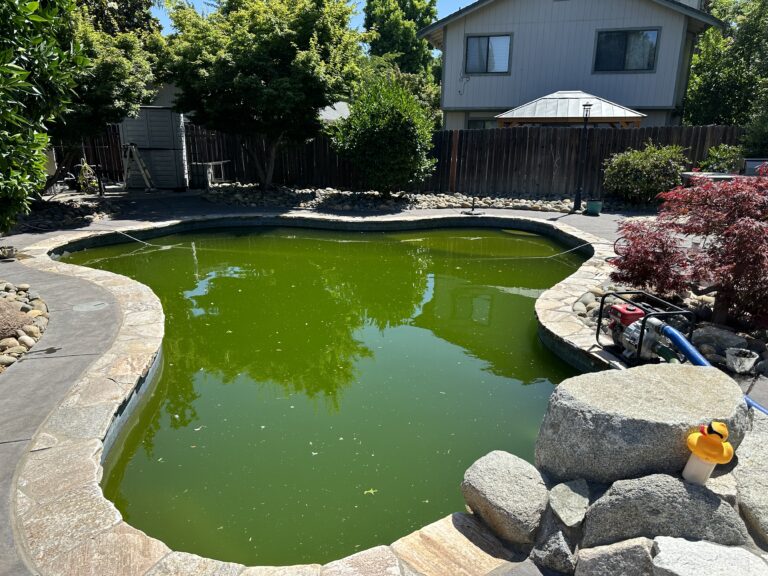
Weak flow and strange pressure readings are the third. If the filter pressure gauge reads unusually low, water is not reaching the pump properly. Unusually high, and the filter is choked. Either way, circulation is dropping right when your water needs it most, and in August weak circulation becomes a green pool fast.
Finally, a breaker that trips repeatedly is an electrical red flag, not a nuisance. A motor drawing excess current is overheating or binding, and resetting the breaker over and over is how motors burn out and how electrical hazards start. Stop resetting and get it inspected.
What You Can Do Right Now to Protect Your Equipment
The cheapest pool pump repair is the one you never need, and August prevention is mostly simple habits.
Keep the water level at mid-skimmer, checked twice a week during triple-digit stretches and before any trip out of town. This is the single highest-value habit on this list. Keep the pump and skimmer baskets empty, because a clogged basket starves the pump and mimics a low water level. Shift long pump runs to overnight and early morning hours when the air is cooler, which eases the motor’s thermal load and dodges peak electric rates. And give the pad some shade if you can do it without blocking airflow around the motor.
Homeowners on our weekly pool service get most of this handled automatically. Our techs inspect the equipment, check o-rings, and flag water level and pressure issues at every visit, which is exactly how August failures get caught in July.
Repair or Replace: The Honest Math
When a pump does go down, the right answer depends on what failed and what the pump is worth.
Seals, o-rings, capacitors, and bearings are repairs. They are quick, relatively inexpensive, and appropriate on a motor with life left in it. A burned-out motor on an older single-speed pump is a different conversation, because at that point you are often putting several hundred dollars into technology that costs real money to run every month.
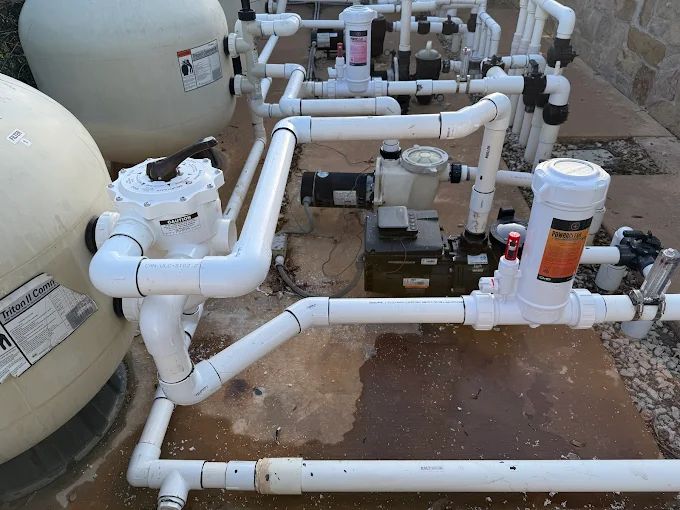
This is where a variable-speed pump deserves a look. A VSP moves water at low speed for a fraction of the energy of a single-speed unit, runs quieter, and handles the long circulation hours a Texas summer demands without the same strain. Between the energy savings and current efficiency standards that have pushed the market this direction anyway, most owners replacing a dead single-speed pump come out ahead going variable-speed within a couple of summers. We install and service Pentair, Hayward, and Jandy equipment through our equipment repair and installation service, and we will give you the repair-versus-replace numbers straight before any work starts.
Do Not Let August Pick the Timing
Equipment always seems to fail on the hottest weekend of the year, usually because the hottest weekend is what finishes off a problem that had been building for weeks. Watch the water level, listen for new noises, take breaker trips seriously, and deal with small symptoms while they are still small.
If your pump is struggling right now, or it already quit, we can help quickly. Bliss Pools has handled pool pump repair for Fort Worth homeowners since 2016, from same-week seal and capacitor fixes to full variable-speed upgrades, with straight answers on which one your situation calls for. Call (817) 672-9063 or request service online, and let’s get your water moving again before the heat turns a pump problem into a green pool problem.
Add Your Heading Text Here
Lorem ipsum dolor sit amet, consectetur adipiscing elit. Ut elit tellus, luctus nec ullamcorper mattis, pulvinar dapibus leo.