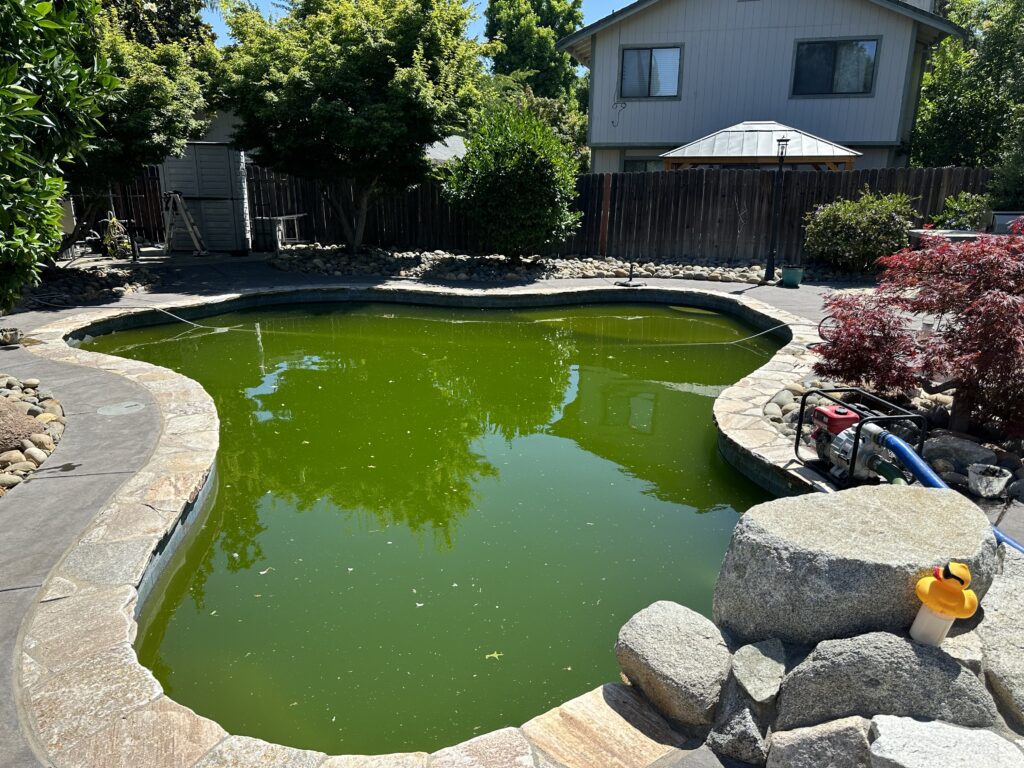
Why Fort Worth Pools Turn Green in July, and How to Stop It Before It Starts
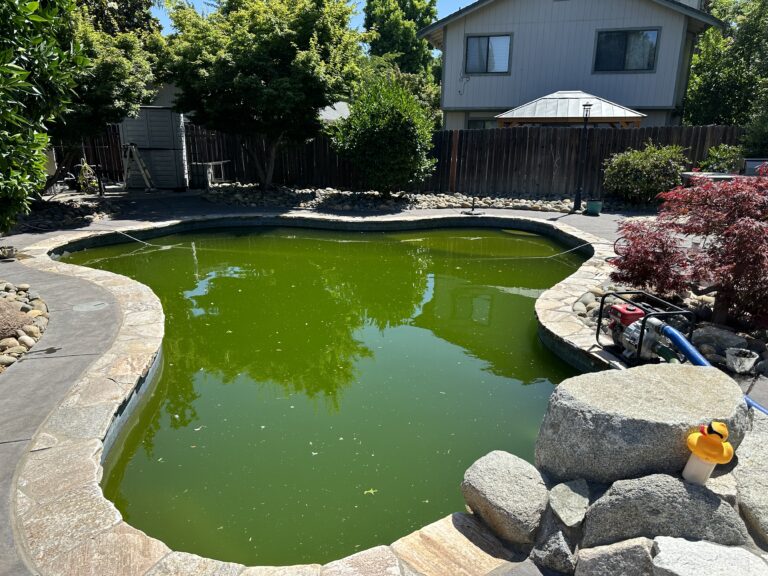
A pool that turns green in July is not bad luck. It is a chlorine and circulation failure, and in Fort Worth’s peak summer heat it happens fast. Water in the high 80s to low 90s sits squarely in the temperature range where algae grows best, and once a bloom takes hold it can go from a faint haze to a green pond in a couple of days. If you are searching for pool algae treatment in Fort Worth, this guide covers both sides of the problem: how to keep algae from starting, and what real recovery looks like once it has.
We have been pulling area pools back from green since 2016, and July is reliably our busiest month for it. The pattern behind almost every green pool we treat is the same, and it is preventable.
Why July Is Peak Algae Season in North Texas
Three conditions converge in a Fort Worth July, and algae needs all three.
Warm water is the first. Algae growth accelerates sharply once water passes 85 degrees, and with air temperatures running past 100, area pools spend most of July in that zone. At those temperatures, algae can double its population in hours, not days, which is why a pool that looked fine Friday can be green by Sunday.
Weak chlorine is the second. As we covered in our guide to why pools burn through chlorine in summer, the July sun destroys unprotected chlorine quickly, hot water raises demand, and overstabilized water ties up what remains. Most July blooms start in a pool whose free chlorine quietly spent a few days near zero.
Food is the third. Phosphates and organic material fuel algae, and by July your pool has been collecting both all season: debris and runoff from the May and June storm rounds, sunscreen and sweat from heavy swim weekends, and grass clippings from weekly mowing. A warm, under-chlorinated pool with a full pantry does exactly what you would expect.
The Three Warning Signs Before a Pool Goes Green
Pools almost never go green without warning. These are the signals we teach customers to act on.
A cloudy haze that will not polish out is the earliest one. When water looks slightly dull even though the chemistry tests okay, microscopic algae is often already suspended in the water, a day or two ahead of visible color.
Slick or slimy walls are the second. Run your hand along the wall at the waterline or on the steps. A slippery film, even on water that still looks blue, is biofilm and early algae growth. If you feel it, brush the entire pool and shock that evening.
Chlorine that will not hold is the third and most telling. If you dose the pool and test near zero a day later with no swimmers in between, something is eating your chlorine, and in July that something is usually algae getting started. Treat disappearing chlorine as a fire alarm, not a nuisance.
Cloudy Water vs. Green Water: What Each One Tells You
Cloudy pool water in summer and green water are different stages of the same fight. Cloudiness means fine particles are suspended in the water, which can be early algae, dead algae after a shock, or a filtration problem. Green means live algae has established itself and is reproducing faster than your sanitizer can kill it.
The distinction matters because it sets the response. A cloudy pool with good chemistry usually needs filtration help. A cloudy pool with weak chlorine needs to be treated as pre-green: brush, shock, and run the pump around the clock. A green pool needs a full recovery protocol, and the deeper the green, the less likely chemicals alone will get you there.
One more variation worth knowing in our area: mustard algae. It shows up as a yellowish dust on shady walls and steps, brushes off easily, and comes right back. It is more chlorine-resistant than standard green algae and usually needs a targeted treatment and higher shock levels to eliminate, so if you keep sweeping up the same yellow patches, stop treating it like dirt.
Prevention: Circulation and Filtration in Extreme Heat
Chemistry gets the attention, but half of algae prevention is mechanical. Algae loves still water, which is why blooms start in dead spots: behind ladders, on steps, in corners the returns do not reach.
Your spring pump schedule fails in July
A pump timer set for six hours back in April is under-circulating badly by July. In peak summer, most Fort Worth pools need 8 to 12 hours of daily run time to turn the water over and keep chlorine distributed. A useful rule of thumb is one hour of run time for every 10 degrees of daytime high, which puts a 100 degree July at 10 hours.
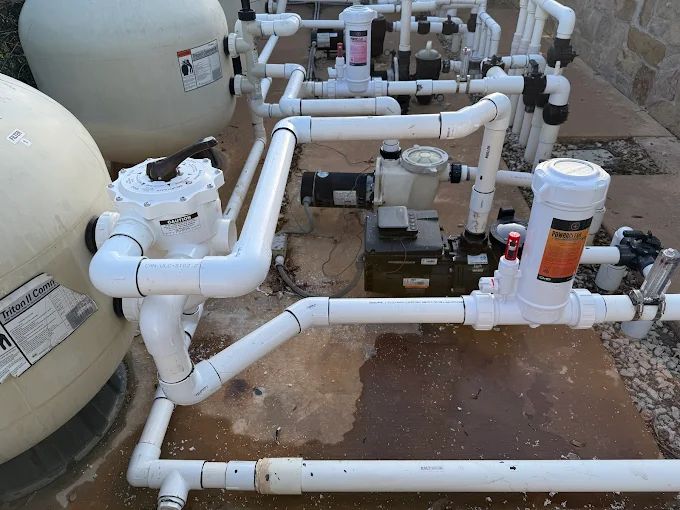
If long run times on a single-speed pump are inflating your electric bill, that is the situation variable-speed pumps were built for. A VSP runs longer at low speed for a fraction of the energy cost, which improves circulation and typically pays for itself over a couple of summers. We install and service Pentair, Hayward, and Jandy equipment through our equipment repair and installation service if your pump is due for that conversation.
Watch the pressure gauge, not the calendar
A filter that has been loading up since spring loses flow exactly when you need it most. Our standard, on our own weekly routes and for DIY owners, is the 12 psi rule: when the gauge reads 8 to 12 psi above its clean baseline, the filter is due. A restricted filter slows circulation, leaves fine particles and algae spores in the water, and makes every chemical you add work harder. A professional filter cleaning in early July is one of the cheapest insurance policies against an August green pool.
When It's Already Green: What Professional Recovery Involves
If your pool has gone green, here is an honest picture of what it takes, because a green pool in 90 degree water rarely responds to one bag of shock.
Real recovery starts with a water test and a physical reset: brushing every surface to break algae loose, clearing baskets, and confirming the equipment can actually circulate. Then comes an aggressive shock protocol, usually with liquid chlorine dosed to the pool’s actual demand, followed by continuous filtration with frequent filter cleaning as it captures the dead algae. Depending on the water, a clarifier or floc may be used to drop dead material to the floor for vacuuming to waste.
And sometimes chemicals are the wrong tool entirely. A pool that has been deep green for weeks, with high stabilizer and a heavy debris load, can cost more to treat chemically than to reset. In those cases a drain and clean is faster, cheaper, and gives you truly fresh water. Part of what you are paying a professional for is knowing which path your pool is on. Our Green 2 Clean service makes that call on the first visit, and most green pools we treat are back to swim-ready within days, not weeks.
Keep Your Pool Blue Through the Hottest Stretch of the Year
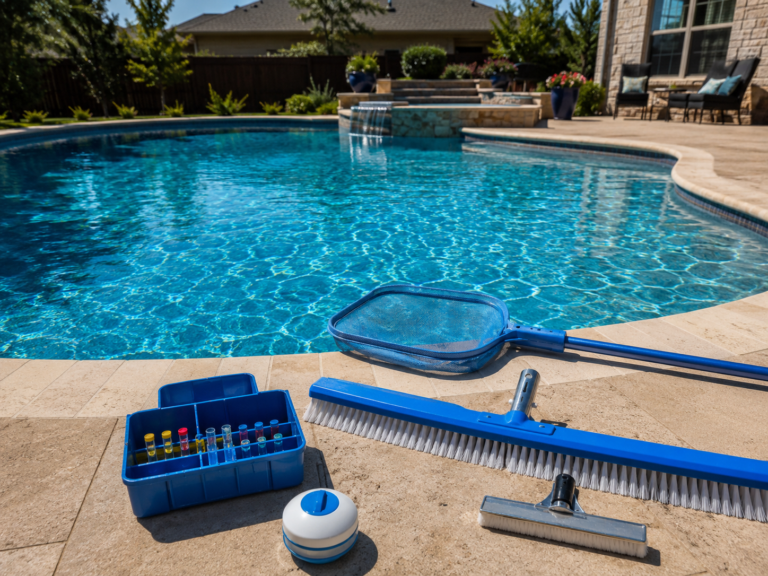
July in Fort Worth is the hardest month of the year to keep a pool clear, and the pools that stay blue are the ones where chlorine holds, water moves, and small warning signs get acted on the same day. Brush regularly, extend your pump schedule, respect the pressure gauge, and never ignore chlorine that disappears overnight.
If your water is already hazy or tinting green, do not dump another round of shock in blind. Bliss Pools has taken Fort Worth, Benbrook, Keller, and Weatherford pools from green to swim-ready every summer since 2016, and our weekly service keeps them that way through the heat. Call (817) 672-9063 or request a free assessment online, and we will tell you exactly what your pool needs, whether that is a treatment plan, a filter clean, or a full Green 2 Clean recovery.