After the Storm: How to Get Your Fort Worth Pool Swim-Ready When Spring Rain Hits
May is the wettest month of the year in Fort Worth, and the storms that roll through North Texas each spring do more to a swimming pool than most homeowners realize. If you are wondering how to clean a pool after a storm, the short answer is this: remove debris first, check your equipment second, and rebalance your water chemistry third, in that order. Skip a step or work out of order, and you can turn a one-day cleanup into a week-long fight with cloudy or green water.
We have serviced pools across Fort Worth, Benbrook, Aledo, and Weatherford since 2016, and every May we see the same pattern. A line of storms comes through, and within 48 to 72 hours the calls start. Here is exactly what those storms do to your water, and how to respond before a messy pool becomes an expensive one.
What May Storms in North Texas Do to Your Pool
A heavy spring storm hits your pool from three directions at once.
First, the rain itself dilutes everything you have worked to balance. Rainwater in North Texas is naturally acidic and carries no chlorine, no stabilizer, and no calcium. Two or three inches of rain can drop your pH and total alkalinity noticeably while thinning out your free chlorine and cyanuric acid at the same time. Your pool water after heavy rain is chemically weaker on every front.
Second, the wind loads your pool with organic material. Late-season oak catkins, pecan and cottonwood debris, grass clippings, and mulch all carry phosphates, which are the primary food source for algae. A pool full of storm debris is a pool with a stocked pantry for an algae bloom.
Third, runoff is the one most people miss. When rain sheets across a lawn or flowerbed and into the pool, it brings fertilizer, soil, and organic contaminants with it. Pools that sit low in the yard or catch drainage from a slope take the worst of it. That runoff is why some pools turn green after a storm even when the owner shocked the water the day before.
The First 24 Hours: Work in the Right Order
The sequence matters more than the products. Here is the order we follow on storm-recovery visits.
Clear debris before you touch the chemistry
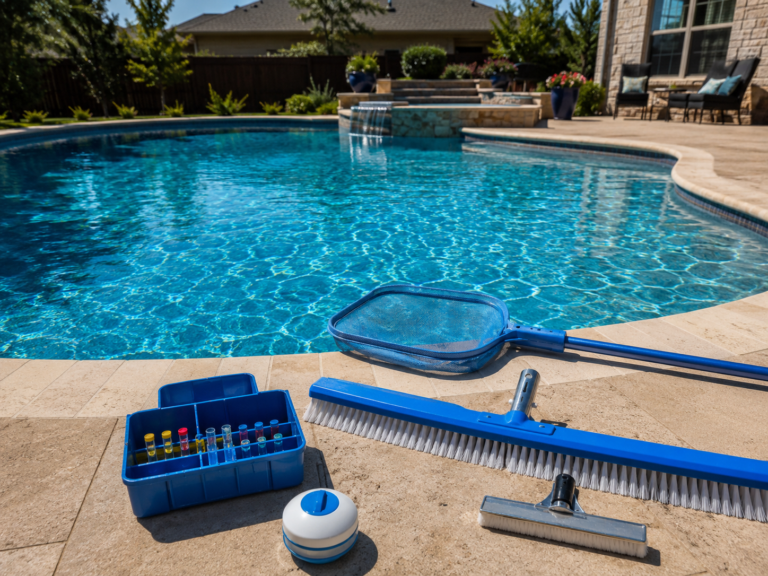
Skim the surface, empty the skimmer baskets and pump basket, and brush the walls and steps. Every leaf and catkin left in the water keeps consuming chlorine and releasing phosphates while it sits there. If you test and dose while the pool is still full of debris, your readings will be outdated within hours.
If silt or fine dirt settled on the floor, vacuum slowly so you do not stir it back into suspension. For heavy silt, vacuuming to waste is better than sending it through your filter.
Check the equipment pad
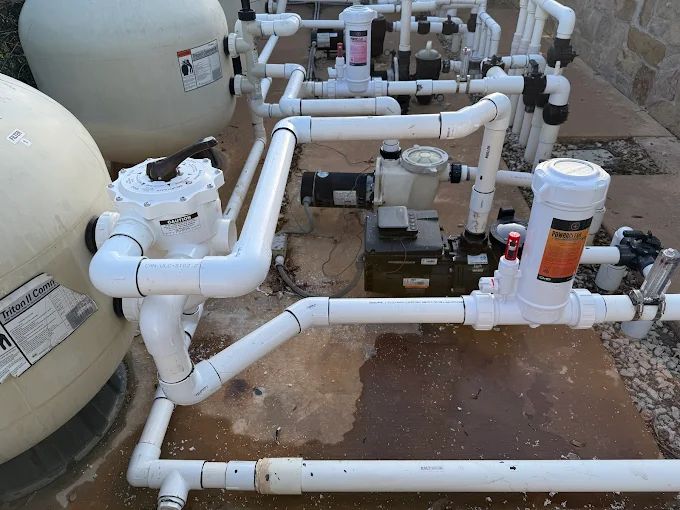
Storms knock out power across Tarrant and Parker County every spring, and a tripped breaker or scrambled timer is one of the most common things we find on post-storm visits. Confirm the pump is running, primed, and moving water at normal pressure. Look at the filter’s pressure gauge. A reading 8 to 12 psi above your clean starting pressure means the filter is loaded and needs attention before it can polish storm-clouded water.
While you are back there, look over the pump lid, o-rings, and any exposed plumbing for hail damage. Cracked pump lids pull air and lose prime, and it is far cheaper to catch that now than after the pump runs dry.
Test, then rebalance in the right sequence
Once the pool is physically clean and circulating, test your water. Correct pH and total alkalinity first. Chlorine works dramatically better in the 7.2 to 7.6 pH range, so shocking a pool with crashed pH after rain wastes product and time. After pH and alkalinity are in range, shock the pool to burn off contaminants, then run the pump continuously for 24 hours.
Recheck cyanuric acid within a few days. Big rain events dilute stabilizer, and unstabilized chlorine burns off fast under the strong May sun in Texas.
When to Lower the Water Level, and When Not to Drain
If the storm filled your pool to the deck, drain it back down so the skimmer opening sits about half exposed. A flooded skimmer cannot pull surface debris, which means everything floating ends up sinking instead. Most pools can be lowered through the filter’s waste setting or with a small submersible pump.
What you should not do after major flooding is fully drain an in-ground pool on your own. Fort Worth sits on expansive clay soil, and after a week of saturating rain the ground around your shell is holding water. Draining a plaster pool into a saturated water table can float or crack the shell, which turns a cleanup into a structural repair. When a full or partial drain is genuinely needed, it should be done with the soil conditions in mind. That is exactly what our pool drain and clean up service is built for, and it is the right call when mud, floodwater, or heavy silt has gotten into the pool.
When a Storm-Hit Pool Needs Professional Cleanup
Plenty of storm recoveries are a solid DIY afternoon. Some are not. Call a professional when:
- Runoff or floodwater visibly entered the pool. Flood-contaminated water can carry bacteria that shock alone does not reliably resolve, and a drain and clean is often the safer and faster path.
- The water has not cleared after 48 hours of continuous filtration and balanced chemistry. At that point the problem is usually the filter, the phosphate load, or early-stage algae, not a missing chemical.
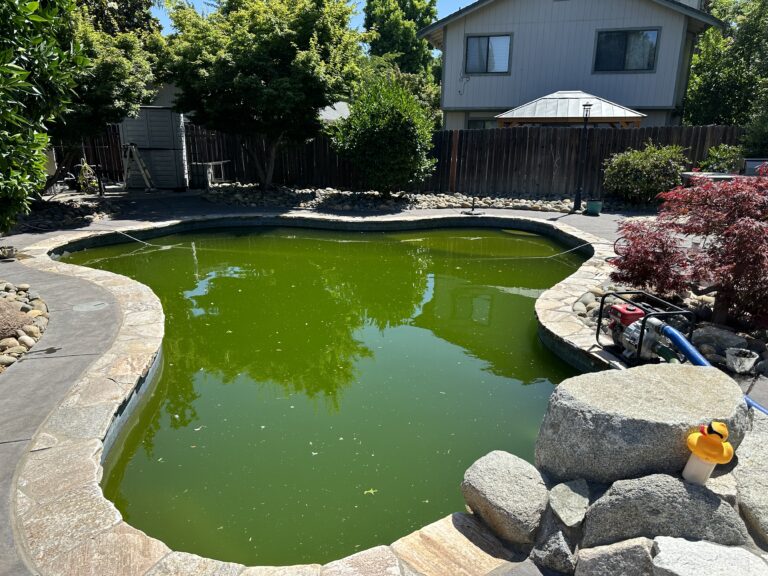
- The water is tinting green. In 80-degree May water, a light green haze becomes a full bloom fast. Our Green 2 Clean treatment exists for exactly this situation, and catching it at the haze stage makes recovery quicker and cheaper.
- Equipment took hail or wind damage. Cracked lids, bent weirs, and damaged filter housings should be fixed before they cascade into pump failure.
There is also the honest math of a Fort Worth spring: this will not be the last storm before Memorial Day. Homeowners on our weekly pool service get storm recovery folded into their regular visits, with chemistry rebalanced and debris handled before it has time to feed anything. For many of our customers, one bad storm season is what convinced them to stop fighting it alone.
Get Ahead of the Next Storm
Spring storms are part of owning a pool in North Texas, but a green or cloudy pool afterward does not have to be. Clear the debris, verify the equipment, rebalance in the right order, and act quickly when the water tells you something is off.
If your pool took on runoff, the water will not clear, or you would rather hand the whole recovery to a crew that does this every May, we can help. Bliss Pools has kept Fort Worth pools swim-ready through storm season since 2016, with drain and clean service for the hard-hit pools and weekly maintenance that keeps the rest ready for Memorial Day weekend. Call (817) 672-9063 or request a free quote online, and we will get your pool back on track before the next line of storms shows up on the radar.