Why Your Pool Burns Through Chlorine in June: A Fort Worth Water Chemistry Guide
Every June, Fort Worth pool owners run into the same frustrating cycle. You add tabs, you shock on the weekend, and two days later the test strip shows almost nothing. If your pool is losing chlorine fast right now, there are four likely reasons: intense Texas sun burning it off, hot water accelerating consumption, heavier bather loads eating through it, and a stabilizer level that has quietly drifted out of range. Usually it is more than one at once.
The good news is that none of this is random. Chlorine loss follows chemistry, and once you understand what June in North Texas does to your water, you can stop guessing at the pool store shelf. We have balanced Fort Worth pools through ten summers now, and this is the explanation we give customers who call us after weeks of fighting it alone.
How Fast Does Chlorine Burn Off in the Fort Worth Sun?
Faster than most people believe. Ultraviolet light breaks down chlorine directly, and unprotected chlorine in full sun can lose the majority of its strength in just a few hours. By mid June, Fort Worth is seeing 95 degree afternoons and a UV index that sits in the very high range for most of the day. Your pool is under attack from sunrise to sunset.
Heat compounds the problem. Once water temperature climbs past 85 degrees, which is normal for area pools by late June, chlorine reacts and dissipates more quickly, and everything organic in the water grows faster too. Warm water raises demand and speeds up loss at the same time.
This is why cyanuric acid, also called stabilizer or conditioner, exists. CYA acts like sunscreen for chlorine, shielding it from UV so it lasts through a Texas afternoon. A pool with no stabilizer can burn through its entire chlorine supply in a single sunny day. But stabilizer is also where most Fort Worth pools quietly go wrong, because the problem in June is usually not too little CYA. It is too much.
The Cyanuric Acid Trap
If you take one thing from this article, make it this section. Overstabilization is the most common chemistry problem we find on first visits to DIY-maintained pools, and it explains most of the “I keep adding chlorine and nothing happens” calls we get.
How trichlor tabs quietly stack CYA
Those slow-dissolving tabs in your floater or chlorinator are trichlor, and trichlor is roughly half stabilizer by weight. Every tab adds CYA to your water along with the chlorine. The chlorine gets used up. The CYA does not. It just accumulates, week after week, all season long.
A pool that runs on tabs from March through June can easily push CYA past 100 ppm without the owner adding a single scoop of standalone stabilizer. The ideal range is roughly 30 to 50 ppm.
The ratio that actually matters
Here is what high CYA does. Beyond protecting chlorine from sunlight, CYA also binds to it and slows it down. The higher your stabilizer climbs, the more free chlorine you need in the water to get the same sanitizing power. As a working rule, your free chlorine should sit around 7.5 percent of your CYA level. At 40 ppm CYA, that means about 3 ppm of chlorine keeps your pool sanitary. At 120 ppm CYA, you would need roughly 9 ppm just to break even, which is more than most owners ever maintain.
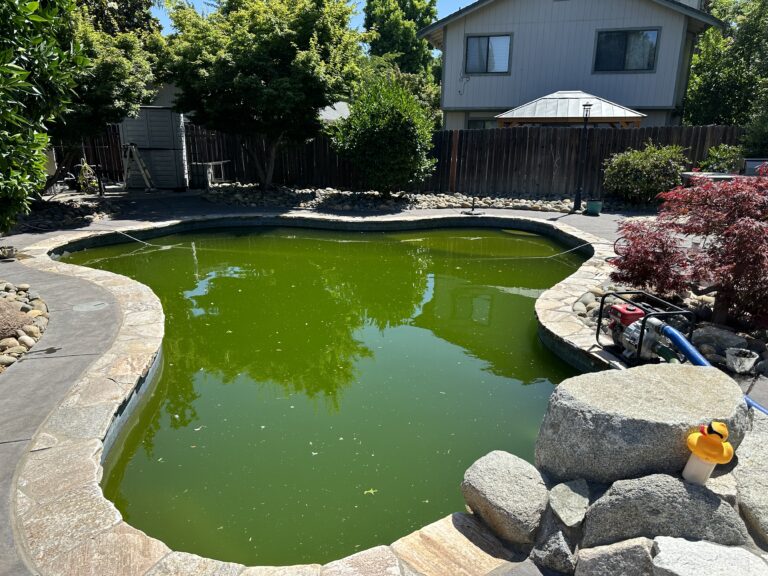
So the pool tests fine on total chlorine, the water is technically holding product, and yet it drifts cloudy and eventually green. The chlorine is present but too tied up to do its job. This is also why free chlorine versus total chlorine matters when you test. Free chlorine is what is actually available to sanitize. A gap between the two readings means chlorine is being consumed fighting contaminants, which is a demand problem stacked on top of the stabilizer problem.
The only real fix for high CYA
Cyanuric acid does not evaporate, does not get filtered out, and no chemical on the pool store shelf reliably removes it at a reasonable cost. The practical fix is replacing water. A partial drain and refill dilutes CYA back into range, and for badly overstabilized pools that is the reset that finally makes chlorine work again. It is one of the more common reasons we perform a pool drain and clean up in early summer, and it is worth confirming your CYA number before you spend another dollar on shock.
Bather Load, Evaporation, and Top-Off Water
June is also when the swimmers show up. School lets out, and a pool that saw two people a week in April suddenly hosts a Saturday party of ten. Every swimmer adds sweat, sunscreen, and organic material, and all of it consumes chlorine. A single busy pool weekend can create enough demand to flatten your free chlorine by Monday, which is why we tell customers to expect to test and often dose after any heavy-use day.
Then there is the water you cannot see leaving. Fort Worth pools can evaporate around a quarter inch per day in summer heat, which adds up to well over an inch and a half a week. Evaporation takes pure water and leaves everything dissolved behind, so your CYA, calcium hardness, and total dissolved solids all slowly concentrate. Meanwhile the hose water you top off with brings its own minerals and no chlorine. The result is water that gets chemically heavier and harder to manage as the summer grinds on, another reason mid-summer chemistry feels like a moving target.
A Realistic June Testing and Dosing Rhythm
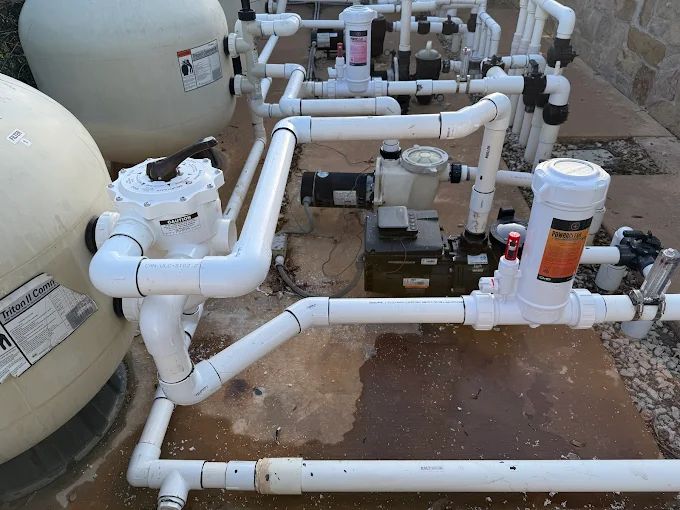
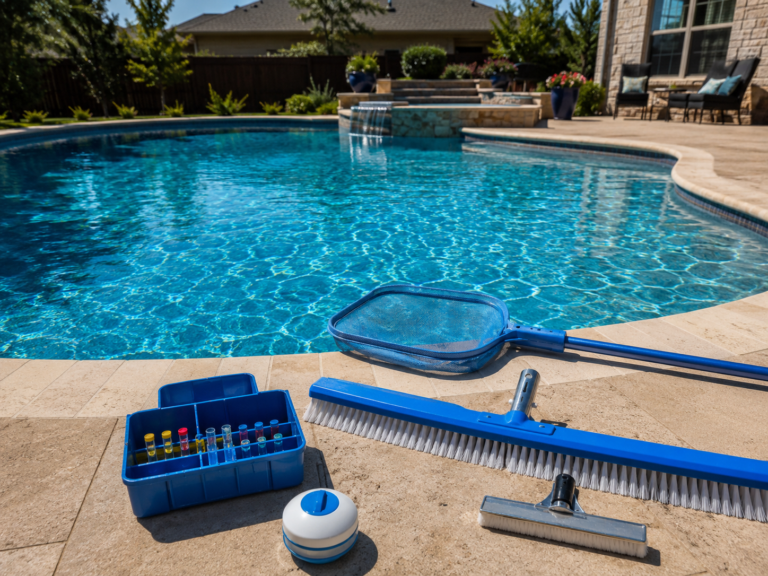
For owners managing their own water, here is an honest cadence for a Fort Worth June. Test free chlorine and pH two to three times a week, and always after a party or a storm. Test CYA and total alkalinity every couple of weeks. Keep pH between 7.2 and 7.6, because chlorine loses a large share of its killing power when pH drifts high. Run your pump longer than you did in spring, and keep an eye on filter pressure, since a loaded filter raises chlorine demand by leaving contaminants in the water. If your gauge is running 8 to 12 psi over its clean baseline, a professional filter cleaning will make every other chemical work better.
Do that consistently and most pools stay clear. The catch is the word consistently. Between testing, hauling chemicals, and correcting the misses, many owners spend more at the pool store by July than professional service would have cost, and they spend their weekends doing it. Our weekly pool service in Fort Worth starts at $170 per month with all chemicals included, and our techs test and balance with every visit, which means CYA creep and chlorine demand get caught before they become a green pool. For a lot of our customers, one June like the one described above was the deciding factor.
Stop Feeding Chlorine to the Sun
Rapid chlorine loss in June comes down to sun, heat, swimmers, and stabilizer, and every one of those has a specific answer. Test more often, keep pH in range, watch your CYA instead of just your chlorine, and give your filter the attention it needs in peak season.
And if you would rather spend June swimming instead of troubleshooting, that is what we are here for. Bliss Pools has kept water balanced across Fort Worth, Benbrook, Keller, and the surrounding area since 2016, with weekly service that includes every chemical and a full equipment check at each visit. Call (817) 672-9063 or request a free quote and water test online, and we will tell you exactly why your pool is eating chlorine before you buy another bucket of it.